Published 2026-10-28 · 9 min read
Heartbreakers, an AI-made Latin American short film: meet Valeria
Heartbreakers is a 3-minute-32-second short film made 100% with AI by ZerezoFilms AI Studio in Mexico City, directed by Rubén Zerecero and produced by Sara Camacho. In this science-fiction drama, Valeria recovers her memory years after a car accident and finds that her husband has replaced her with an android who wears her face. It is in Spanish with English subtitles, framed in 2.39:1 anamorphic widescreen, and every shot was generated with Seedance 2.5.
- Directed by
- Rubén Zerecero
- Produced by
- Sara Camacho
- Service
- AI Filmmaking
Transcript
- Valeria
- Idiot! Look at her, look at the way she looks at me, with that stupid face.
- Julián
- No, it's not her fault.
- Valeria
- She has my face, my body, she has you.
- Android
- And your sense of humor… that one's actually good.
- Valeria
- You'll see, you bitch!
The first thing you notice: they act
Most AI video still looks like a demo: faces that drift, characters that pose, dialogue read like a voiceover. What you notice in the first twenty seconds of Heartbreakers is that the characters act. Valeria's voice cracks mid-line, her jaw tightens, she breathes before she attacks. The android holds a smile half a second too long, and that is all it takes to make her frightening. Julián takes the slap and does not know where to look. None of these people exist: every face, body and voice was designed in the studio.
The voices are actors' voices, not announcers'. Each character has a voice brief —age, timbre, pace, where they are from— and the voice was designed from that description with Seed Audio, without cloning any real person. It then travels into the video model as a voice plate, a black video with the line running, so Valeria sounds like the same woman in the clinic, in the car and at the dinner table.
The clip above is the film's opening scene, exactly as it plays in the final cut. This is part one of a five-part production diary that ends with the full film. We start with the lead character and with the technical decision that defines how the film looks: anamorphic widescreen, built entirely in prompts.
Heartbreakers at a glance
| Title | Heartbreakers |
|---|---|
| Genre | Intimate science-fiction drama |
| Runtime | 3 min 32 s |
| Aspect ratio | 2.39:1 anamorphic (21:9) |
| Language | Spanish, with English subtitles |
| Setting | A contemporary house in Santa Fe, Mexico City |
| Director | Rubén Zerecero |
| Producer | Sara Camacho |
| Studio | ZerezoFilms AI Studio, Mexico City |
| Technique | 100% AI: characters, locations, voices and picture generated; edit, grade and subtitles in post |
Synopsis
Valeria loses her memory in a car crash while she is seven months pregnant. Years go by. One afternoon, in the dining room of her own house, it all comes back, and with it an unbearable certainty: while she was gone, another woman with her exact face took her seat at the table, her place beside her husband and her place in her son's life.
Logline: years after a car accident, a woman gets her memory back and finds that her husband has replaced her with an android who wears her face. Heartbreakers is a story about a love that refuses to wait, and about what we are willing to replace rather than lose someone.
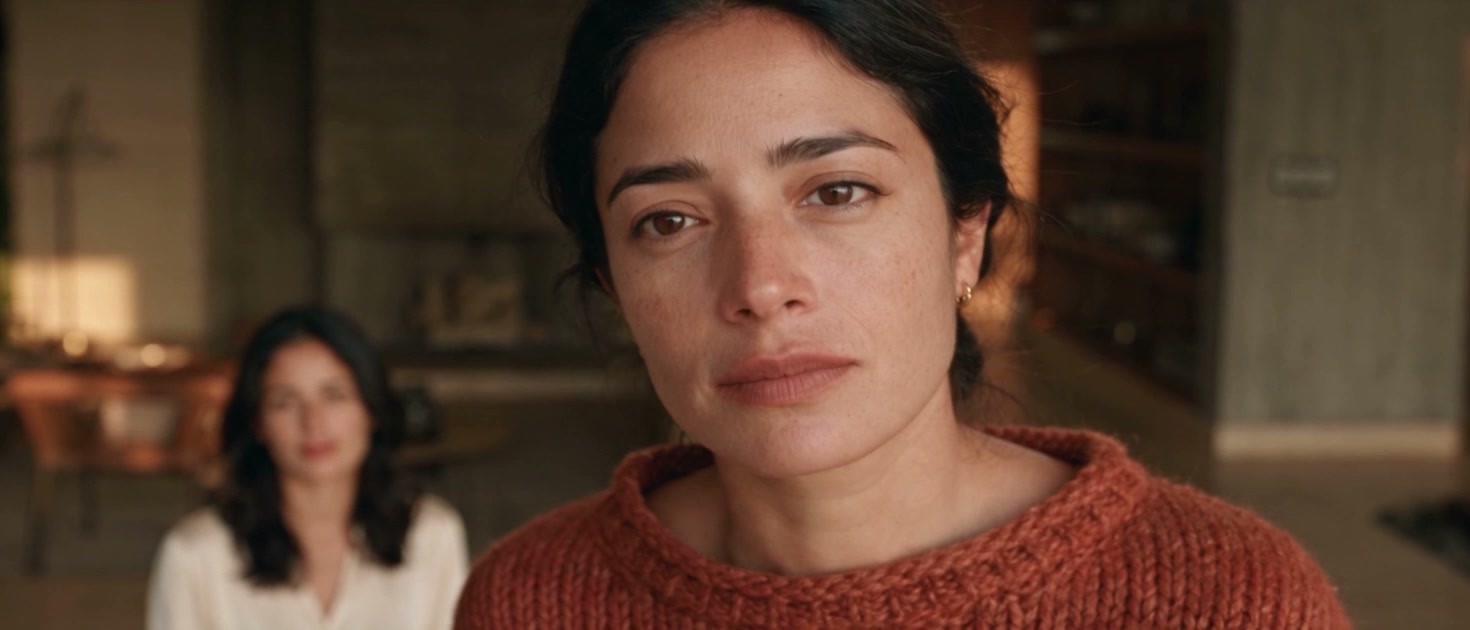
Valeria, the lead
Valeria is the heart of Heartbreakers. The film tells her story across three timelines, and each one has its own wardrobe, its own light and its own way of moving:
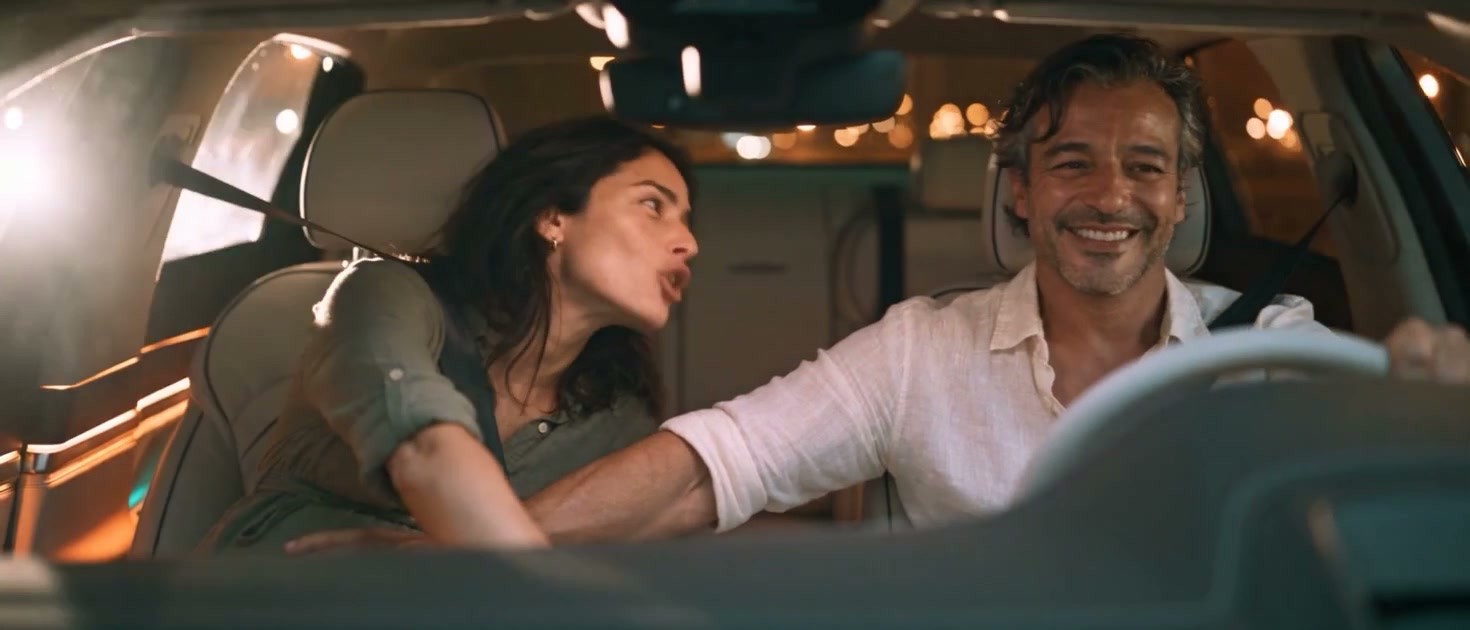
- 01Before the accident. A woman who laughs, fights over the music in the car and pulls her husband's hand to her belly when the baby kicks.
- 02The lost years. A patient with no memories in a gray-lit clinic. She looks at her husband the way you look at a kind stranger, and asks the hardest question in the film: "Are you his father?"
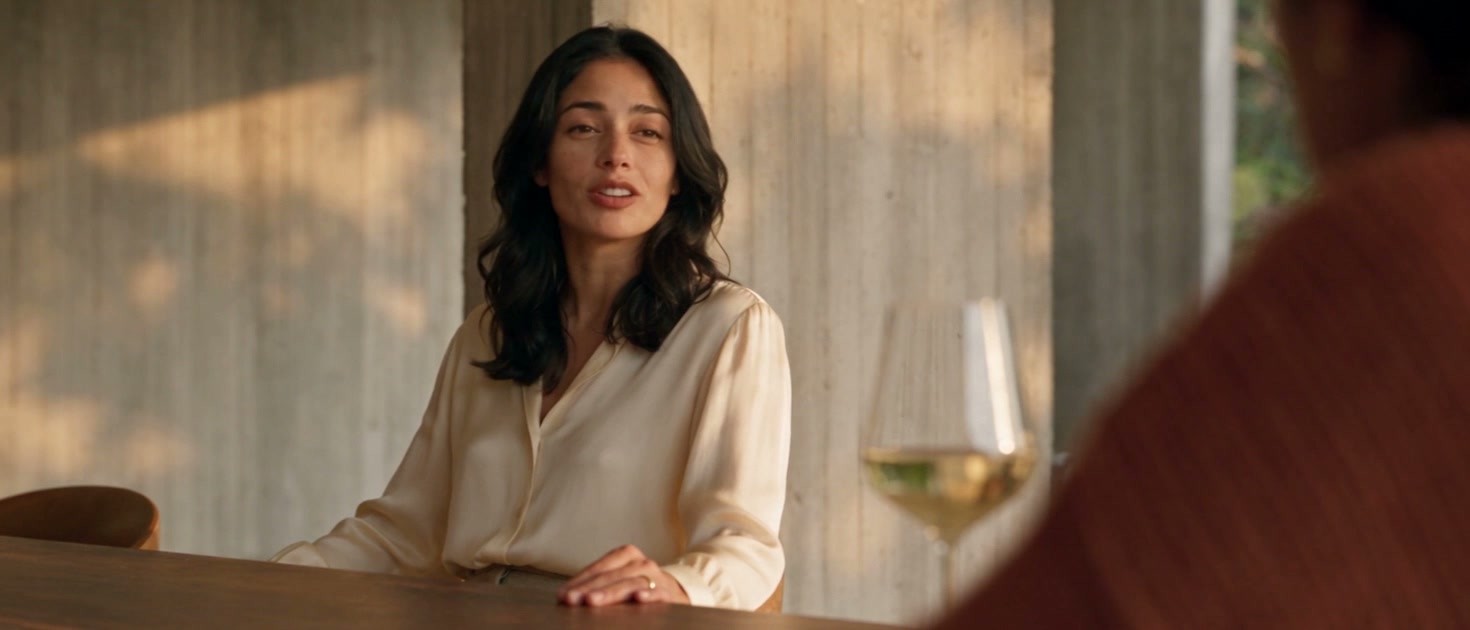
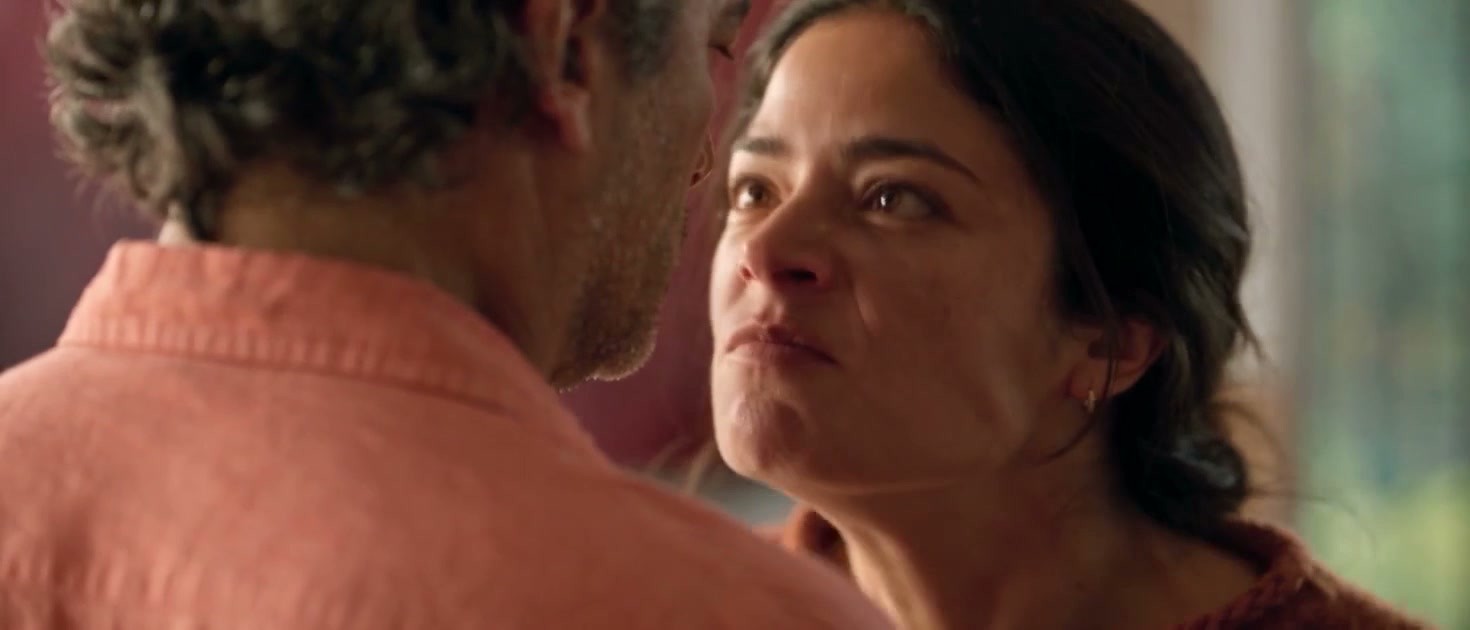
- 03Today. A woman waking up inside a life that is no longer hers. Terracotta sweater, hair pulled back, no wedding ring. Her anger is human, clumsy and real: "You hijacked my life! This is my life!"
Opposite her is the android: the same face, hair down, a light blouse and a perfect calm. Building two characters with one face, and making sure the audience can tell them apart in every single shot, was one of the central challenges of the project. The answer was a set of cues repeated throughout the film: hairstyle, wardrobe color, the wedding ring and the way each one breathes. That process is the subject of part two.
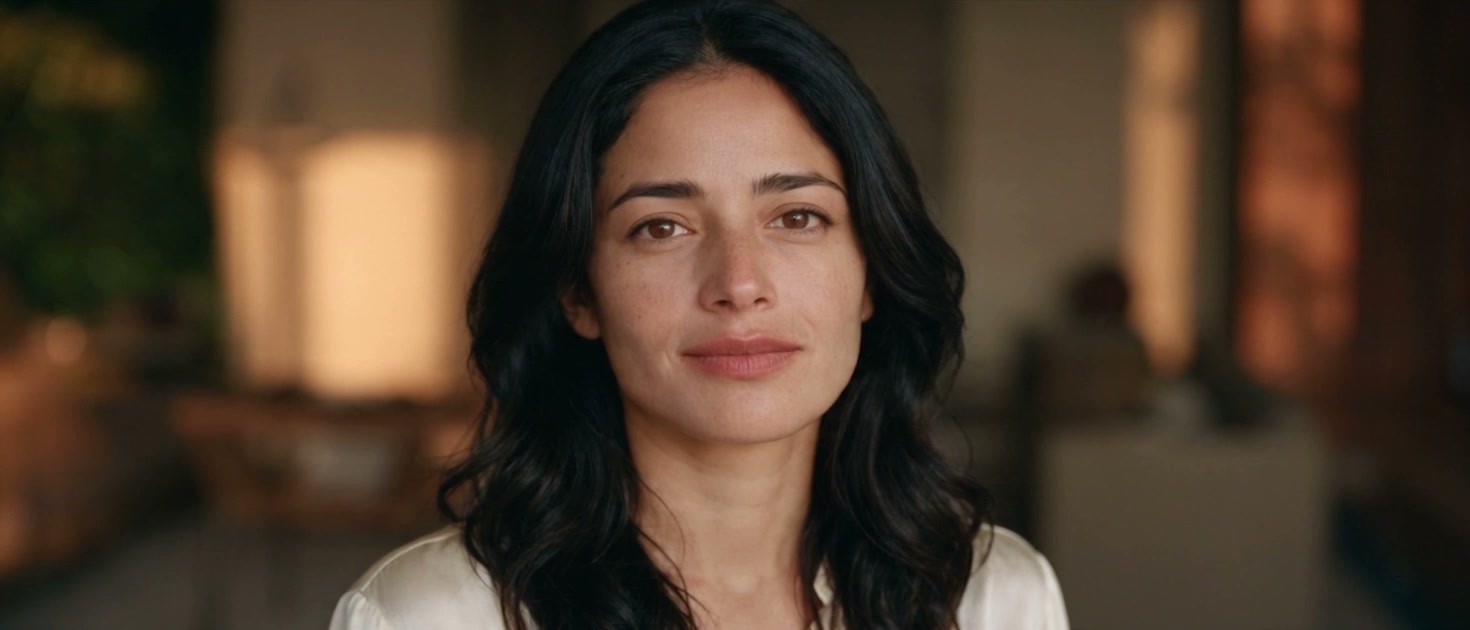
How Valeria was built
- 01One locked face. Every character starts from a single approved image that works as their ID. Every variant —Valeria in hospital, on the night of the crash, today— is generated from that lock, never from another variant, so the face never drifts.
- 02A character sheet. Face, full body and back on a neutral gray background: the reference the video model receives in every scene.
- 03A voice of her own. Designed from a written brief and delivered as a plate, so it sounds the same in every scene. No voice in the film imitates a real person.
- 04Restraint. The performance rule for the whole project: emotion lives in stillness, eyeline and breath. No soap-opera gestures. Valeria's anger is short and clumsy; the android's calm is what scares you.
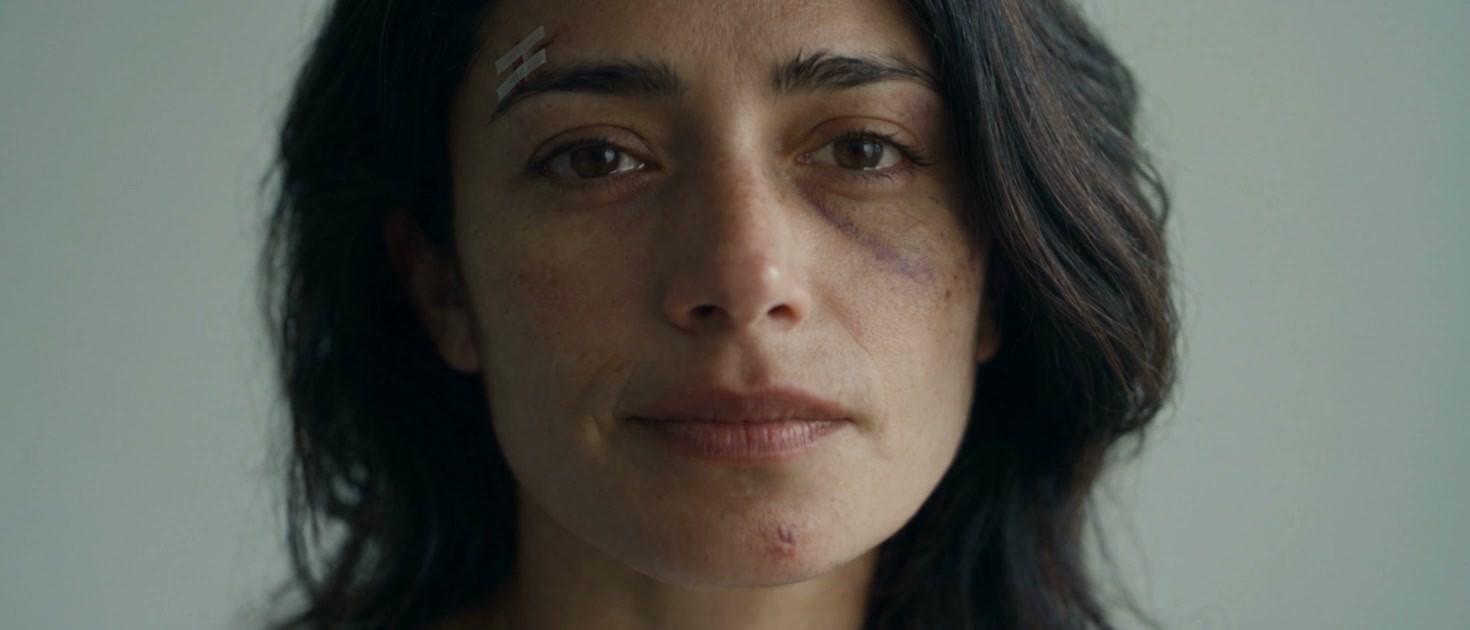
Key scenes
1. The slap (opening)
The film opens with a slap. Julián regains his balance against the picture window, the Santa Fe towers behind him, and the camera cuts to Valeria's face. At the head of the table, the android watches. It sets up the triangle in twenty seconds, and it is the clip at the top of this page.

2. The night of the accident
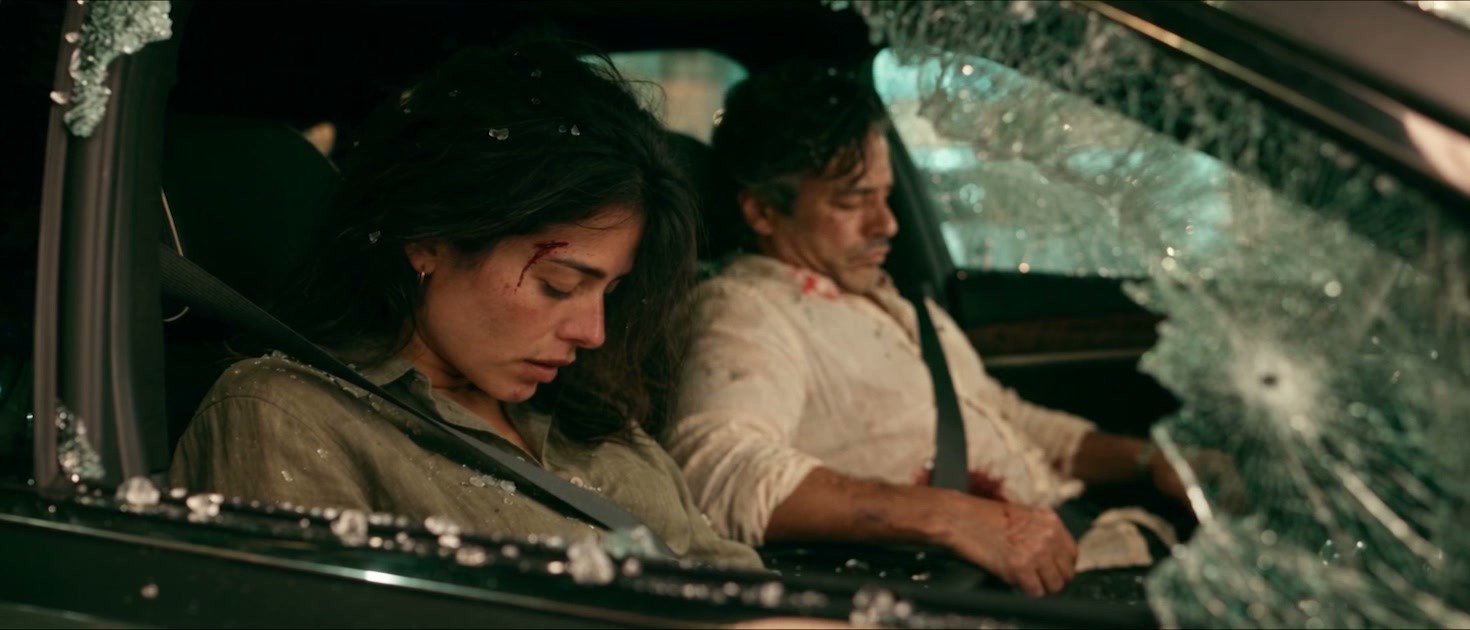
A memory. An avenue at night, the car stereo, a hand on a pregnant belly. It is the only neo-noir sequence in the film: amber sodium light against teal shadows, with the city's bokeh stretched into ovals.
3. The confrontation
Her memory comes back and Valeria crosses the dining room to her husband: "Where is my son?" It is the most physical scene in the film and the one that triggers the third act, which we are not giving away yet.
Camera language: why anamorphic
What an anamorphic look is
An anamorphic lens squeezes the image horizontally as it is captured; here, by a factor of two (2x squeeze). In post the image is unsqueezed into a very wide frame with a 2.39:1 aspect ratio, the classic cinema widescreen. Beyond the shape, those lenses leave a signature audiences read as "cinema" even if they cannot name it:
- 01Oval bokeh. Out-of-focus lights become vertical ovals instead of circles.
- 02Horizontal flares. A direct light source throws a line across the frame. We kept them to subtle warm amber flares and banned blue streaks, which read as fake.
- 03Edge falloff. A slight loss of sharpness and light toward the edges that pulls the eye to the center.
- 04A wider view at the same framing. Two or three characters fit in one shot with air between them.
In an intimate drama that width is used to keep people apart: there is almost always a gap between Valeria, Julián and the android. The negative space tells the story too.
A lens package written into every prompt
AI has no camera, but it understands how to describe one. To make every shot in the film intercut with every other, each video prompt carries the same optical package, word for word:
Project lens package, identical in every clip so all shots intercut:
large-format ARRI Alexa Mini LF sensor with 2x-squeeze anamorphic primes,
2.39:1 widescreen, Kodak Vision3 250D film emulation, fine 35mm grain,
gentle highlight roll-off; oval bokeh, a slight anamorphic falloff at the
frame edges, and only subtle warm amber horizontal flares from direct
light sources — never blue streaks.
| Element | What it brings |
|---|---|
| ARRI Alexa Mini LF | Large-format sensor: shallow depth of field and naturally textured skin |
| 2x anamorphic primes | The 2.39:1 frame, oval bokeh and horizontal flares |
| Kodak Vision3 250D | The color response of a daylight-balanced motion picture film stock |
| 35 mm grain, gentle roll-off | Highlights burn out softly, like negative film, without digital video's hard clip |
Focal lengths written as fields of view
One technical trick that worked: video models read millimeters inconsistently, especially with anamorphic glass. So every focal length in the prompt is paired with its horizontal field of view:
| Focal length (spherical equivalent) | Horizontal FOV | What we used it for |
|---|---|---|
| 32 mm | 60° | The dining-room tableau: three small figures inside the architecture |
| 35 mm | 55° | Tracking shots and transitions |
| 50 mm | 40° | Eye-level point-of-view shots |
| 85 mm | 24° | Frontal, centered close-ups |
| 100 mm macro | 21° | Eyes and hands in extreme detail, the hinge points between scenes |
The camera rules were strict: no zooms, no focal change within a shot, no handheld. Locked-off camera or slow dolly, with planimetric, symmetrical compositions, so even the fight looks composed.
Memories in a different frame
Some moments are framed in 4:3 inside the 2.39:1 frame, with pillarbox bars. The narrower, older shape reads as memory or confinement, and tells the audience something has shifted without a title card.
Cutting on the eyes
Scenes are joined with match cuts: an extreme close-up of Julián's eyes in the present cuts to the same eyes years earlier. And there are god's-eye shots, locked overheads from a high corner, that rhyme across the film: in the clinic and at the intersection of the crash.
One color look per timeline
Each timeline has its own look, written into the prompt with a color temperature in Kelvin and a 60/30/10 rule: 60% of the frame in the dominant color, 30% in the secondary and 10% in a single accent.
| Timeline | Light | Palette |
|---|---|---|
| Today, late afternoon | Low western sun 20 minutes before sunset, balanced to 4300 K so it reads golden amber | 60% cream, sand and travertine · 30% walnut and warm brown · 10% one accent (the coral shirt, the terracotta sweater). Zero blue: the sky is beige haze |
| The clinic (memory) | Soft overcast daylight, 5600 K | Desaturated green-gray; Julián's mustard shirt is the only warmth |
| The night of the accident (memory) | Sodium-vapor streetlights passing one after another | Neo-noir: sodium amber against deep teal, dense blacks, oval bokeh |
| Morning | Clean white light through the window | Cream and warm white: the brightest look in the film |
The goal is for the audience to know which timeline they are in from color alone, before they understand the scene.
The ZerezoFilms AI Studio workflow
This is how Heartbreakers went from page to screen:
- 01Screenplay. A master script in standard film format, with scenes, action lines and dialogue.
- 02Block breakdown. Every scene is split into clips of 15 seconds or less: master scenes of 3 to 5 shots carrying the dialogue, and 6-to-8-second micro-scenes that bridge two masters with a detail (hands, eyes, an object).
- 03Synthetic casting. Fully generated faces, one approved lock per character and gray-background sheets for every costume and state. Image work for this stage ran on generators such as Midjourney, Nano Banana Pro, Seedream and GPT Image.
- 04Locations and props, one at a time. The house, the clinic, the street of the crash, the box, the photos in the living room: every element gets its own reference image and is never merged with another.
- 05Color-coded blocking maps. Before each clip we draw a top view, an overhead plan with one color per character, to lock who stands where and which way they face.
- 06Actors' voices, not announcers'. Each character has a voice brief and a voice plate, designed with Seed Audio without cloning anyone.
- 07Video with Seedance 2.5, built from elements. No start frame: the model receives the characters, the location, the map and the voices, plus a prompt split into blocks (context, format, optics, light, color, sound and continuity locks).
- 08No music at generation. Only dialogue, room tone and effects. Music, if any, is decided in the edit.
- 09Frame-by-frame review. Identity, wardrobe, geography, hands and rhythm. When a detail breaks, takes are combined before anything is regenerated.
- 10Edit, grade and subtitles in post, for the Spanish version and the English-subtitled version.
What Heartbreakers sets out to prove is that AI can make auteur cinema, not just eye-catching effects: direction, camera language, restrained performances and continuity, made in Mexico and built for an international audience.
Coming up in this diary
- 01Part 2 · Julián and the android. How you build an identical face the audience can still tell apart, and how the voices were designed.
- 02Part 3 · The house. Architecture, Santa Fe light and blocking maps.
- 03Part 4 · The night of the accident. Directing an action sequence with AI.
- 04Part 5 · The screening. The full short film and what we learned.
About ZerezoFilms AI Studio
ZerezoFilms is a production company in Mexico City making films, series, commercials and digital content, both with traditional crews and with AI. Heartbreakers is an original production of ZerezoFilms AI Studio, our AI film and commercial production studio in Mexico City, the same team behind the Zerezo Bites commercial and the Zerezo Coffee spot. Every part of this diary lives on the Heartbreakers hub page.
Frequently asked questions
Can you make a short film entirely with AI?
Yes. Heartbreakers was made 100% with AI: characters, locations, voices and picture. The directing work —script, camera language, performance, continuity, edit and grade— is still human, and it is what turns generated footage into cinema.
Are the voices in Heartbreakers real actors?
No. Every voice was designed from a written brief with Seed Audio, and none imitates or clones a real person. Each one is fed to the video model as a voice plate, so every character sounds the same from scene to scene.
How do you get an anamorphic look in AI video?
Describe the lens package precisely and repeat it word for word in every prompt: sensor, 2x anamorphic primes, 2.39:1, film stock and flare rules. Pairing each focal length with its horizontal field of view keeps framing consistent across shots.
What tools were used to make Heartbreakers?
Seedance 2.5 for video; Midjourney, Nano Banana Pro, Seedream and GPT Image for characters, locations and props; Seed Audio for the voices. Edit, color and subtitles were done in post.
Who made Heartbreakers?
It was directed by Rubén Zerecero and produced by Sara Camacho at ZerezoFilms AI Studio, the AI production arm of ZerezoFilms in Mexico City.